Why Dental Practices Can’t Rely on Software Alone for HIPAA Compliance
Most articles about HIPAA compliance software skip the most important thing a dental practice owner needs to understand: no software makes you compliant. HIPAA compliance is an operational and technical program — not a software feature.
Dental offices face a specific combination of HIPAA risks that most general healthcare platforms aren’t built for: digital X-ray and CBCT imaging stored on local servers, practice management software (Dentrix, Eaglesoft, Open Dental) housing appointment schedules and treatment histories, front-desk staff frequently sharing login credentials, cloud backup services that may lack signed Business Associate Agreements (BAAs), and AI-assisted scheduling tools that could transmit ePHI without proper safeguards.
The HIPAA Security Rule applies to every dental practice that electronically transmits health information — regardless of size. Solo practices face the same OCR audit obligations as large dental service organizations (DSOs). In recent years, solo and small-group practices have been hit with five-figure fines for failing to conduct a documented Security Risk Analysis (SRA) alone.
A compliance software platform handles the documentation layer: SRA tools, policy templates, staff training, and BAA tracking. What it cannot do is configure your servers, monitor your network, enforce access controls on your workstations, or test your backup and disaster recovery solution. That’s the gap dental practices need to understand before picking a tool — and it’s why the last entry on this list is a different category of solution entirely.
With that context established, here are the ten best options for managing HIPAA compliance in a dental practice in 2026. Foris LLC offers a free HIPAA compliance assessment for practices in the Austin and San Antonio areas that want to know where they actually stand.
How We Evaluated These HIPAA Compliance Tools for Dental Offices
We evaluated each option across six criteria relevant to dental practices specifically — not generic healthcare IT:
- Healthcare and dental specificity — does the platform address dental workflows, imaging data, OSHA requirements, and practice management software?
- HIPAA program completeness — SRA, policy management, staff training, BAA tracking, incident response, and audit documentation
- Active security vs. documentation-only — does the tool monitor and protect, or just create paperwork?
- Pricing transparency — is the cost publicly listed, or do you need three demo calls to find out?
- Practice size fit — solo practice, group practice, or DSO?
- Support model — self-serve, dedicated coach, or compliance expert?
For tools 1–9, the rankings reflect fit specifically for dental practices. Tool #10 (Foris LLC) is a different category — a managed IT partner that embeds HIPAA controls, security hardening, and backup testing into daily IT operations — included because it addresses the infrastructure gaps that software-only tools leave open.
Quick Comparison: Top 10 HIPAA Compliance Software for Dental Practices
| # | Tool | Best For | Pricing | Dental-Specific? |
|---|---|---|---|---|
| 1 | Compliancy Group | Full HIPAA + OSHA program, any practice size | Contact | ✅ Yes |
| 2 | Medcurity | Affordable SRA for solo/small practices | From $499/yr | ✅ Yes |
| 3 | Accountable HQ | Budget-friendly, transparent pricing | From $199/mo | ✅ Yes |
| 4 | Abyde | HIPAA + OSHA, 3,000+ practices | Contact | ✅ Yes |
| 5 | Live Compliance | Compliance + active security in one platform | From $399/mo | ✅ Yes |
| 6 | Patient Protect | Real-time breach prevention, independent practices | From $39/mo | ✅ Yes |
| 7 | Vanta | Multi-framework (HIPAA + SOC 2), dental groups | Contact | ⚠️ Partial |
| 8 | Drata | Multi-framework, DSOs with tech stack | Contact | ⚠️ Partial |
| 9 | HIPAA Vault | HIPAA-compliant cloud hosting + backup | From ~$120/mo | ⚠️ Partial |
| 10 | Foris LLC | Embedded HIPAA IT for Austin/San Antonio dental | Contact | ✅ Full-stack |
1. Compliancy Group: Best All-in-One HIPAA Compliance for Dental Practices
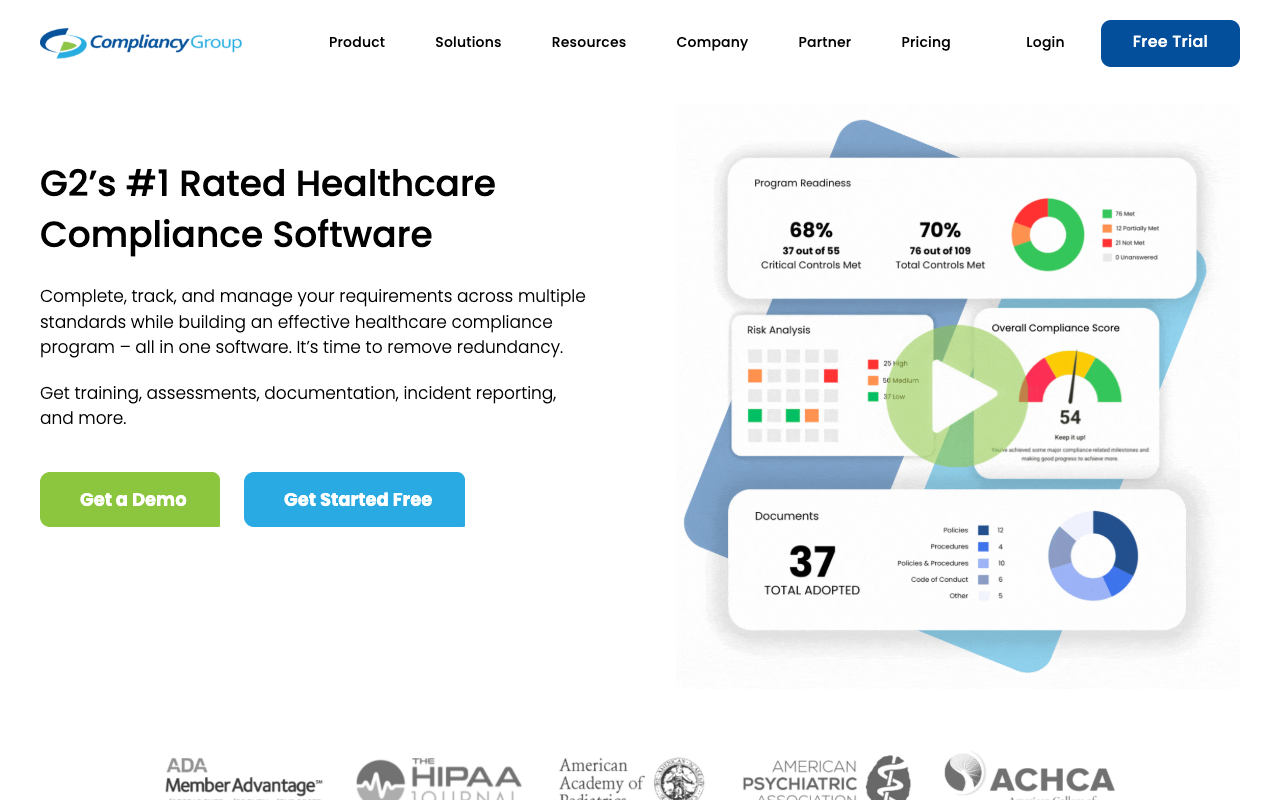
Compliancy Group has been building HIPAA compliance software since 2005 — built by former healthcare auditors who understand what OCR actually looks for. Their platform, The Guard, covers the full compliance stack that dental practices need: Security Risk Analysis, 100+ policy templates, HIPAA and OSHA staff training, BAA management, vendor due diligence, and incident reporting.
The standout feature for dental practices is the dedicated Compliance Coach assigned to every account. Rather than submitting support tickets into a queue, your coach reviews your SRA, flags gaps in your compliance program, and is available when questions come up — critical for practices without an internal compliance officer. Compliancy Group also provides a HIPAA Seal of Compliance, visible to patients, and an OCR Audit Response Program to prepare for government investigations.
The tradeoff: pricing requires a sales conversation, and The Guard doesn’t provide active network monitoring or phishing defense. Dental practices with more complex IT environments will still need a separate IT partner to manage technical safeguards. For practices that want HIPAA and OSHA covered under one platform with expert guidance baked in, it’s the most complete documentation-first option available.
Pricing: Contact for pricing (tiered by organization size)
Best for: Multi-provider dental practices and group practices wanting guided HIPAA + OSHA compliance with a named expert on every account
2. Medcurity: Best Security Risk Assessment Tool for Solo and Small Dental Practices
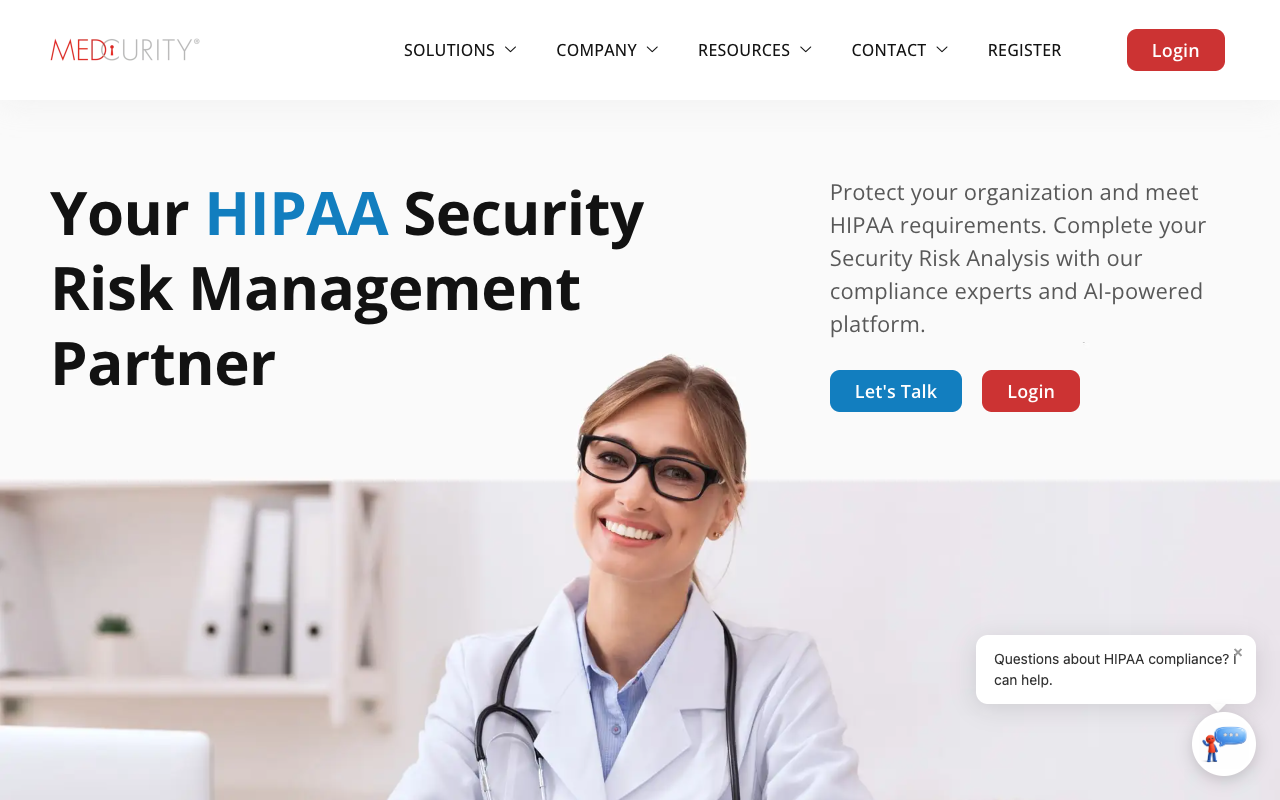
The first thing dental practice owners notice about Medcurity is the price: starting at $499 per year. That’s not a stripped-down trial — it’s a full-featured HIPAA Security Risk Analysis platform validated across more than 1,000 healthcare facilities, including small practices.
Medcurity’s SRA is the core product and it shows. The platform generates customized, audit-ready reports directly formatted to meet OCR expectations — the document HHS requests first in any investigation. Beyond the SRA, the platform includes BAA management, HIPAA training, policy creation tools, network vulnerability assessments, and a centralized risk dashboard.
For dental practices, managing HIPAA compliance without a dedicated compliance officer or IT staff is exactly the scenario Medcurity is built for. The platform’s guided workflow walks practice managers through the full risk assessment without requiring compliance expertise. An advisor-assisted option is available for practices that want expert guidance on top of the software.
The honest limitation: Medcurity is SRA-focused. It doesn’t provide continuous network monitoring, active phishing defense, or the ongoing technical safeguard oversight that managing network infrastructure and dental imaging servers requires. It’s the right starting point — especially for smaller practices watching managed services IT pricing — but not a complete solution on its own.
Pricing: From $499/year (self-service). Advisor-assisted plans available on request.
Best for: Solo dentists and small practices that need an affordable, OCR-ready compliance program without large software budgets
3. Accountable HQ: Best Budget-Friendly HIPAA Compliance Software for Small Practices
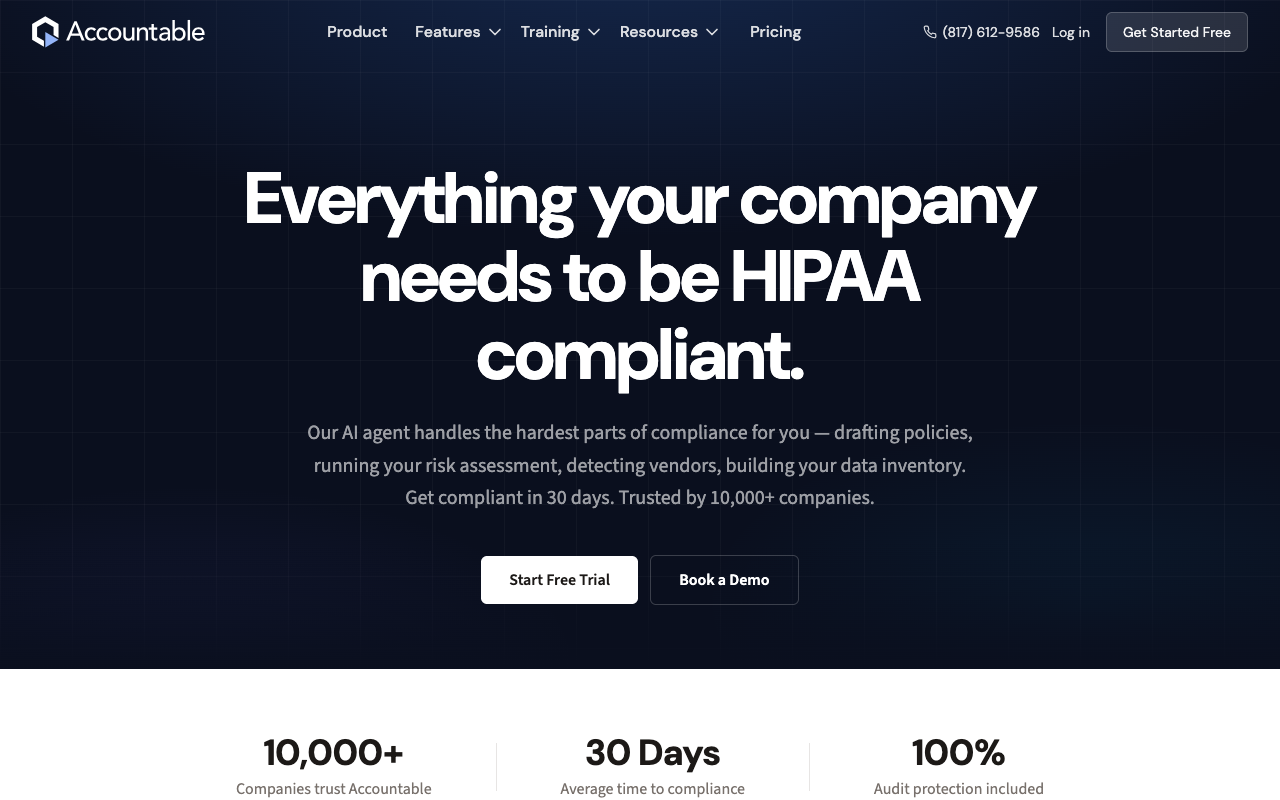
Accountable HQ does something most HIPAA compliance platforms refuse to do: it publishes its pricing upfront. The Basic HIPAA plan starts at $199/month ($169/month billed annually) with a 7-day free trial and no credit card required — a meaningful advantage for practice managers who don’t want to sit through multiple sales demos before knowing if a tool is in budget.
The platform covers the full HIPAA compliance workflow relevant to dental offices: AI-driven Security Risk Assessment, policy templates, data flow mapping, staff training (including Security Awareness and Bloodborne Pathogens, not just HIPAA basics), vendor management, BAA tracking, and breach monitoring. The Pro tier adds phishing simulation, bringing it surprisingly close to what enterprise security programs include. An explicit audit protection guarantee is included across all plans.
The limitation: Accountable HQ is HIPAA-focused only. It doesn’t cover OSHA training, which dental practices are also required to maintain. Practices that need both HIPAA and OSHA compliance will need to supplement with a second tool or choose Compliancy Group or Abyde instead.
Pricing: Basic HIPAA: $199/mo ($169/mo annual). Plus: $299/mo. Pro: $799/mo. 7-day free trial.
Best for: 1–5 person dental practices wanting transparent pricing and a self-service HIPAA program without a sales conversation
4. Abyde: Best for HIPAA and OSHA Compliance in One Dental Platform
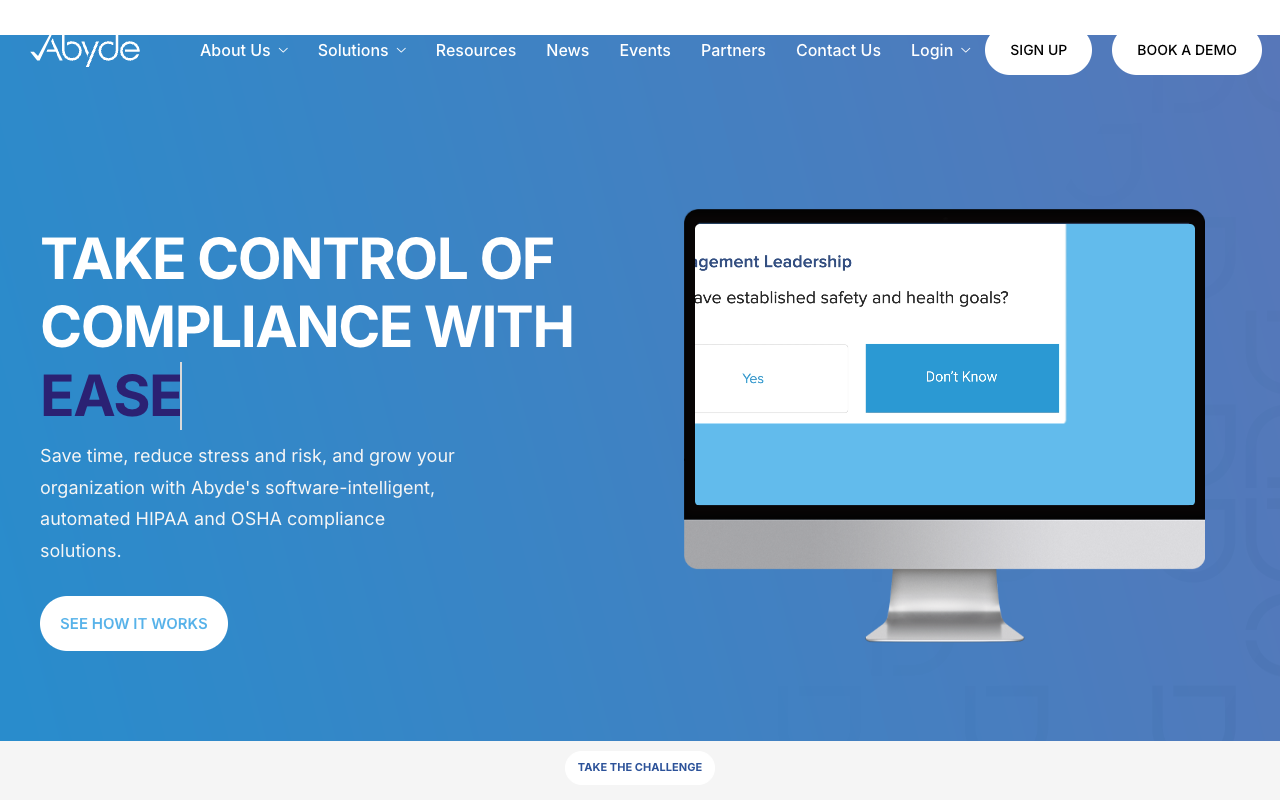
Abyde has one job: make HIPAA and OSHA compliance manageable for healthcare practices that don’t have a compliance team. It does that job well — 94% of its 3,000+ customers renew annually, a retention metric that’s harder to fake than review stars.
For dental practices specifically, Abyde’s training modules are PACE and COPE accredited, meaning they count toward continuing education credits for clinical staff in many states. That’s a real differentiator: practices where staff must track HIPAA compliance training and CE hours simultaneously get both handled in one place. The platform also includes dynamic policy generation that adapts to the specific practice type, automated risk assessments in plain language, and real-time alerts when federal or state HIPAA guidance changes.
Abyde also offers a dedicated module for business associates — useful for dental practices whose vendors (IT providers, billing companies, cloud backup services) need their own HIPAA compliance documentation. What Abyde is not is a technical monitoring platform. It handles the administrative safeguards layer but leaves network-level security, managing network infrastructure, and server monitoring to a separate IT partner.
Pricing: Contact for pricing (demo-required; not publicly disclosed)
Best for: Small and mid-size dental practices, optometry offices, and multi-location healthcare practices needing combined HIPAA + OSHA compliance
5. Live Compliance: Best for Active HIPAA Security Monitoring + Documentation
Live Compliance stands apart from every other documentation-first tool on this list by combining the compliance management layer with active security operations in a single platform. Founded in 2010 with 16 years of exclusive healthcare focus, the platform serves 500+ healthcare organizations and reports a 100% audit success rate.
The Essentials tier ($399/month) bundles phishing simulation, dark web monitoring, and excluded-parties verification together — a combination that competitors typically gate to higher tiers or sell as add-ons. For dental practices that want both the paperwork and active breach prevention, that entry tier offers meaningful value. The Professional tier ($895/month) adds SIEM, encrypted email, and vulnerability monitoring — enterprise-grade capabilities that most dental practices would otherwise need a separate IT vendor to provide.
The honest limitations: Essentials is more expensive than documentation-only tools at the entry level. Live Compliance doesn’t yet hold SOC 2 Type II certification, and its public review footprint is smaller than Compliancy Group’s. For dental practices that already have strong IT security in place and need only documentation depth, the combination platform pricing may exceed what they actually need. But for practices that want compliance and security operations in one place — and want to reduce their vendor count — it’s the strongest integrated option in the category.
Pricing: Essentials: $399/mo + $8.33/employee. Professional: $895/mo + $8.33/employee.
Best for: 5–50 person dental practices that want phishing defense, dark web monitoring, and HIPAA documentation under one provider
6. Patient Protect: Best Real-Time HIPAA Breach Prevention for Independent Dental Offices
Patient Protect is built specifically for independent dental practices and small healthcare providers — the segment the enterprise HIPAA compliance software market was largely not designed to serve. Pricing starts at $39/month, making it the most accessible active-prevention option in this roundup.
The platform takes a different approach from documentation-first tools. Rather than prioritizing policy generation and SRA paperwork, Patient Protect emphasizes real-time security monitoring, breach simulation, and secure messaging — active prevention alongside documentation. For a three-person dental office that needs something leaner than an enterprise GRC platform, that prioritization makes practical sense.
The platform satisfies a significant number of HIPAA technical requirements automatically at account creation — encryption, access controls, audit logging, and session management — reducing the manual configuration burden on practice staff who aren’t IT professionals. The right fit depends on whether a practice’s priority is documentation records or actively closing security gaps in real time. Patient Protect is the answer for practices focused on prevention, especially those managing HIPAA compliance without any dedicated IT support.
Pricing: From $39/month
Best for: Solo practitioners and independent dental offices needing affordable active HIPAA breach prevention with lean setup requirements
7. Vanta: Best for Dental Groups Needing HIPAA + SOC 2 Multi-Framework Compliance
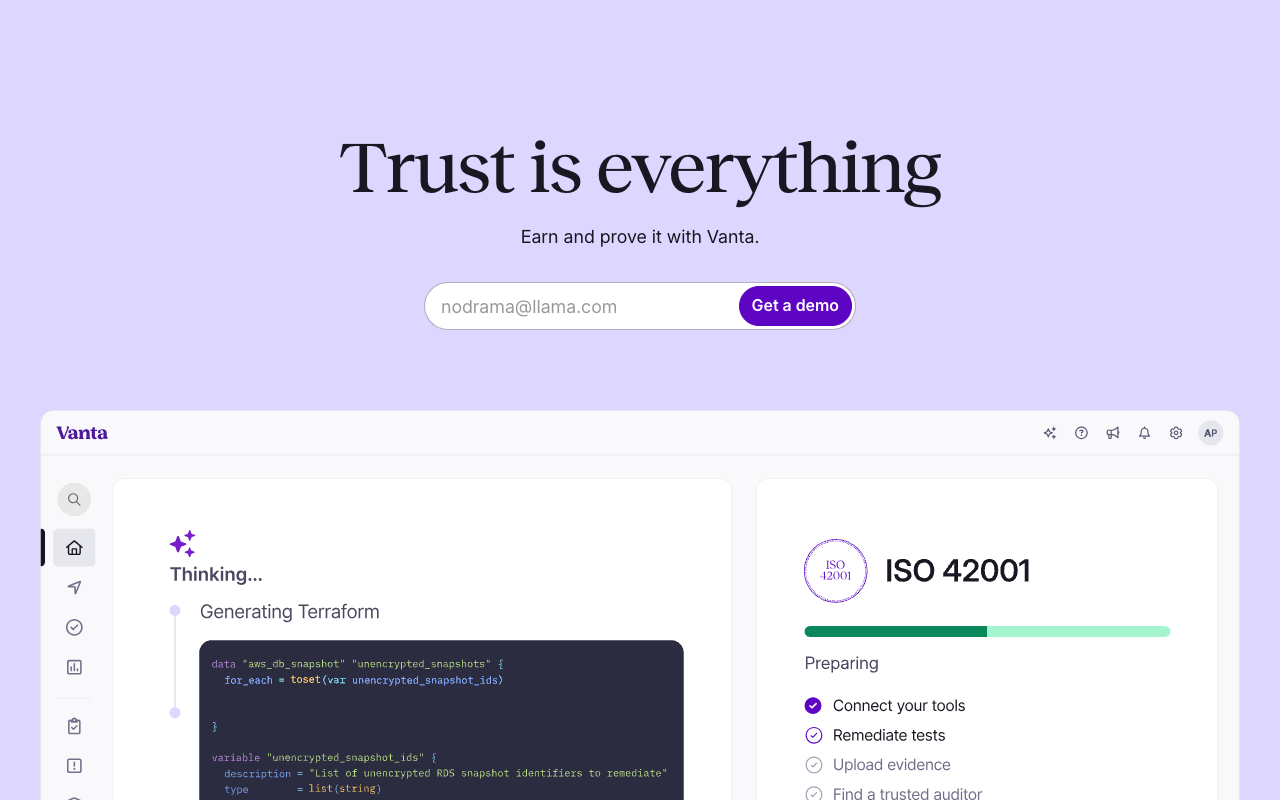
Vanta is the category default for multi-framework compliance. With 16,000+ customers and 400+ integrations, it has become the go-to answer for organizations that need HIPAA alongside SOC 2, ISO 27001, or HITRUST. For dental groups or DSOs that also operate healthcare technology platforms — and need compliance across multiple frameworks in one dashboard — Vanta is a natural fit.
For pure HIPAA compliance, Vanta maps existing cloud infrastructure to HIPAA controls automatically, collects evidence continuously, and surfaces control failures in real time. If a dental group is already running SOC 2 through Vanta, adding HIPAA is relatively low-friction.
For independent dental practices, Vanta is almost certainly overkill. It has no OSHA coverage, no dental-specific training modules, and no practice management workflow context. Pricing — estimated at $10,000–$25,000+ annually — is structured for mid-market and enterprise organizations, not small practices watching managed services IT pricing. Vanta earns its spot here for the specific use case of dental enterprises or DSOs with a multi-framework compliance roadmap.
Pricing: Contact for pricing (estimated $10,000–$25,000+/year)
Best for: Dental groups and DSOs that need HIPAA alongside SOC 2 or ISO 27001 under one compliance platform
8. Drata: Best Compliance Automation Platform for DSOs and Dental Enterprises
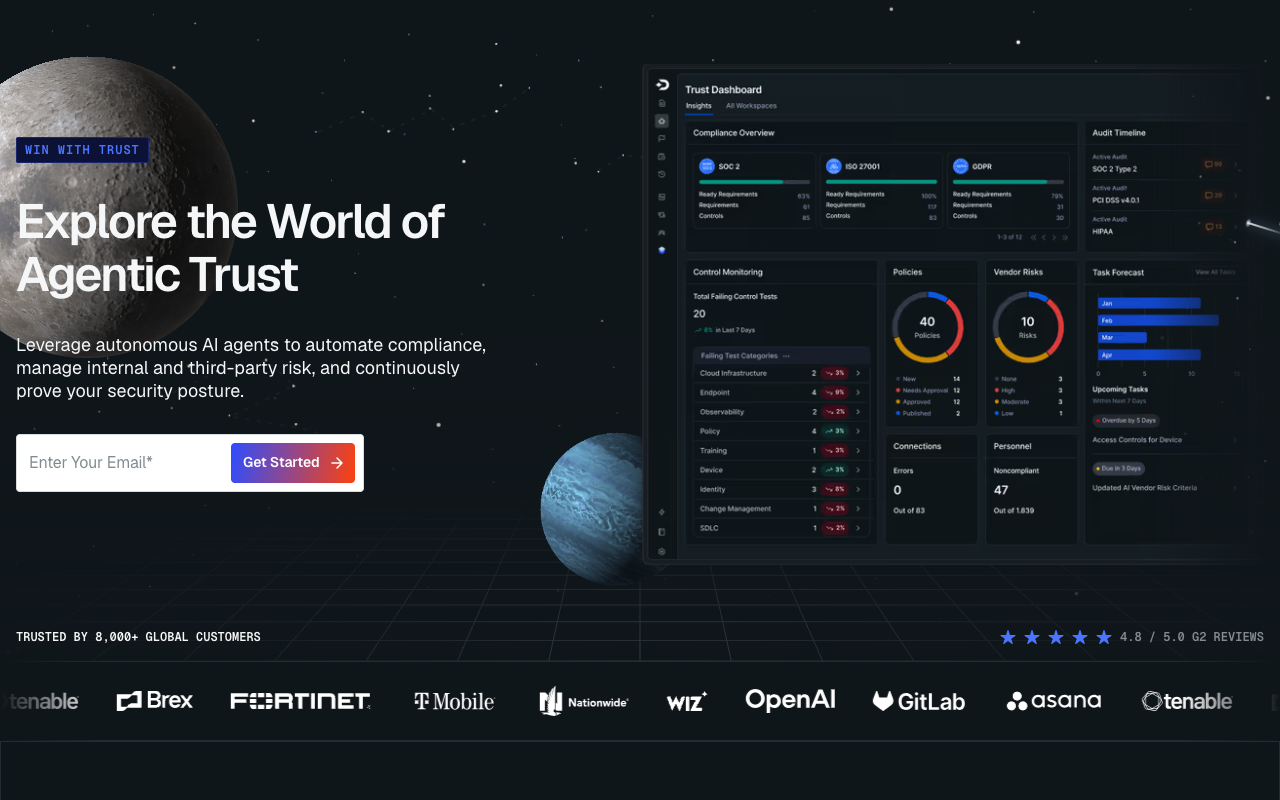
Drata has earned a 4.8/5 rating on G2 across 1,153 reviews, with support scores that consistently outrank competitors. For DSOs operating healthcare technology platforms — or dental enterprises that need HIPAA as part of a broader compliance program alongside SOC 2 — Drata’s autonomous compliance agents are genuinely impressive.
Drata’s approach uses software agents that continuously scan infrastructure, collect evidence against pre-mapped HIPAA controls, flag drift, and surface remediation tasks automatically. For a dental enterprise already on SOC 2 with Drata, layering HIPAA on top means the audit evidence is largely already collected.
For a typical dental office, Drata is the wrong tool: no OSHA coverage, no clinical training, no covered entity workflows. It’s a SaaS compliance platform that includes HIPAA, not a dental practice compliance platform. Pricing starts around $12,000+/year for multi-framework plans — appropriate for enterprise budgets, not solo or group practices. Drata earns its place here for DSOs and dental enterprises with complex tech stacks that require hipaa compliance services integrated into a broader GRC program.
Pricing: Contact for pricing (estimated $12,000+/year for multi-framework)
Best for: DSOs and dental enterprises that need HIPAA as one component of a multi-framework compliance program alongside SOC 2 or ISO 27001
9. HIPAA Vault: Best for HIPAA-Compliant Cloud Hosting and Backup for Dental Offices
HIPAA Vault occupies a distinct category from the other tools on this list: it’s primarily a HIPAA-compliant cloud hosting and managed infrastructure provider, not a compliance management platform. Managed plans range from approximately $120/month for WordPress hosting to $599–$749/month for fully managed Linux or Windows environments.
For dental practices, this matters in two specific scenarios. First, practices whose websites collect patient contact forms or appointment requests may already be handling protected health information — and standard cloud hosting without proper encryption, monitoring, and a signed BAA creates compliance exposure. HIPAA Vault solves that infrastructure problem at the hosting level. Second, dental offices handling high-volume digital imaging data that needs a HIPAA-compliant small business backup solution and cloud storage destination will find HIPAA Vault’s managed infrastructure appropriate.
The honest limitation: HIPAA Vault is not a compliance management program. It doesn’t provide SRA tools, staff training, policy templates, or incident management workflows. Practices using HIPAA Vault for hosting still need a separate compliance platform — Compliancy Group, Medcurity, or Accountable HQ — to manage the administrative safeguards layer. Think of HIPAA Vault as a technical safeguard for your cloud infrastructure, not a complete backup and disaster recovery solution or a standalone compliance answer.
Pricing: ~$120/month (WordPress) to $599–$749/month (managed server environments)
Best for: Dental practices needing HIPAA-compliant cloud hosting for websites, imaging storage, or practice data — as a complement to a documentation-focused compliance platform
10. Foris LLC: Best Managed IT Partner for Embedded HIPAA Compliance in Austin and San Antonio Dental Practices
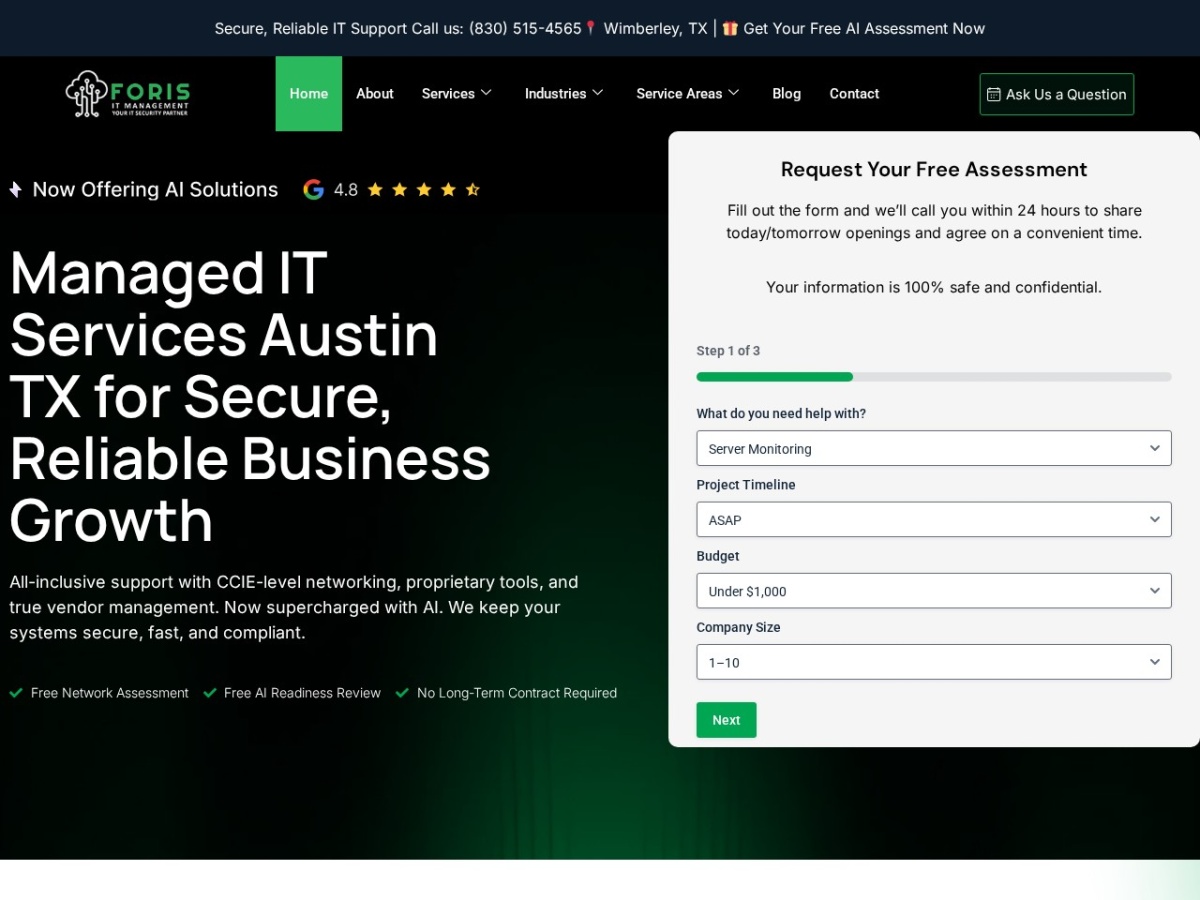
Every tool above solves the documentation side of HIPAA compliance. Foris LLC solves something different: the gap between what software documents and what actually happens to your servers, your network, your dental imaging workstations, and your patient data every day.
Foris LLC is a managed IT services provider founded in 2018, serving dental and healthcare practices across the Austin and San Antonio metro areas. Their all-inclusive managed IT service embeds HIPAA and PCI controls, audits, and staff training directly into daily IT operations — not as a separate compliance exercise, but as part of how the environment is managed and monitored continuously.
Here’s what that means in practice for a dental office:
- 24/7 AI-Assisted Monitoring of servers and workstations, including the imaging servers that store X-rays and CBCT data — with proactive issue detection before patient data is at risk
- CCIE-certified networking (Routing & Switching) — enterprise-grade expertise applied to the practice’s network infrastructure, ensuring access controls, segmentation, and monitoring are actually configured correctly, not just documented
- Proprietary management software that delivers deeper visibility, faster fixes, and tighter security than typical resale platforms — giving the team visibility into what’s actually happening across every device in the practice
- Backup testing and disaster recovery: automated, encrypted backups with tested recovery procedures — not just a backup and disaster recovery solution that runs unmonitored, but one that’s verified to work
- Vendor coordination: Foris manages BAAs with third-party vendors and coordinates compliance documentation across the practice’s full IT stack
- Hot spare hardware pre-configured and ready to overnight to remote locations — keeping multi-site dental practices operational even when hardware fails
Foris also builds AI receptionists for dental offices, deploying automated front-desk systems that handle scheduling and inbound communications within a HIPAA-compliant framework. That’s a capability no documentation-only compliance platform can offer.
A Google reviewer from Litton Family Dental noted: “Alan and crew have been taking carqe of us for years. Always available and helpful.” Jim Peck, DDS added: “Foris, LLC has taken exceptional care of our office for many years. They are trustworthy, deliver prompt, reliable service.”
Foris offers a free HIPAA compliance assessment and a free Network Assessment for practices in the Austin and San Antonio areas — with no long-term contract required. For dental practices managing HIPAA compliance as managed IT services for small businesses in Texas, Foris represents the only option on this list that treats compliance as an operational program embedded in the IT environment itself.
Pricing: Contact for pricing. Free Network Assessment + free HIPAA compliance review offered upfront.
Best for: Dental practices in the Austin and San Antonio, TX metro areas that need HIPAA compliance embedded into fully managed IT — not just a dashboard to document it
How to Choose HIPAA Compliance Software for Your Dental Practice
Choosing the right hipaa compliance services option comes down to three questions. Answer them before you book a single demo.
Are You a Solo Practice, Group Practice, or DSO?
Practice size determines the right tier. Solo practitioners and practices under five providers are best served by Medcurity ($499/year) or Accountable HQ ($199/month) — both allow self-service evaluation without a sales call. Group practices of 5–25 providers should evaluate Compliancy Group, Abyde, or Live Compliance, where guided support and OSHA coverage become necessary. DSOs and dental enterprises with multi-location IT environments or technology platforms should consider Vanta or Drata for multi-framework compliance, paired with a managed IT partner like Foris LLC for San Antonio and Austin locations.
Do You Need Documentation Software or Full IT Security Coverage?
This is the question most dental practices don’t ask — and it’s the most important one. Documentation-first platforms (Compliancy Group, Medcurity, Accountable HQ, Abyde) produce the SRA, policies, training records, and BAA documentation that OCR asks for. They do not monitor your network, protect against phishing attacks on your front-desk staff, test your backups, or manage the vendor relationships that create compliance exposure. If your practice has no dedicated IT support, a documentation tool leaves the technical safeguard layer completely unaddressed. That’s where a managed IT services partner with HIPAA expertise fills the real gap.
What’s Your Budget for HIPAA Compliance?
Budget is the fastest filter. Under $1,000/year: Medcurity. Under $3,600/year: Accountable HQ Basic. $5,000–$10,000/year: Compliancy Group, Abyde, or Live Compliance Essentials. $10,000+/year: Vanta or Drata for multi-framework enterprise needs. For managed IT services for small businesses that include HIPAA compliance as part of all-inclusive support, Foris LLC offers predictable monthly costs that replace the combined expense of separate compliance software, IT support, monitoring, and backup tools.
Frequently Asked Questions About HIPAA Compliance Software for Dental Practices
What is HIPAA compliance software, and do dental offices really need it?
HIPAA compliance software helps covered entities meet the requirements of the HIPAA Privacy Rule, Security Rule, and Breach Notification Rule. It typically automates the Security Risk Analysis, policy management, staff training tracking, and BAA documentation. Every dental practice that electronically transmits health information — which includes virtually every practice that accepts insurance or uses electronic records — is a covered entity subject to these requirements. Software significantly reduces the risk of incomplete documentation that causes audit failures.
How much does HIPAA compliance software cost for a dental practice in 2026?
Dedicated HIPAA compliance software for dental practices ranges from $499/year (Medcurity, self-service) to $799/month (Accountable HQ Pro) for documentation-first platforms. Active-security platforms like Live Compliance start at $399/month plus a per-employee fee. Enterprise multi-framework tools (Vanta, Drata) typically run $10,000–$25,000+/year and are built for DSOs or dental enterprises, not small practices. Many practices also budget separately for managed IT services, backup and disaster recovery, and network monitoring — costs that a full-service managed IT partner bundles into one predictable monthly fee.
What’s the difference between HIPAA compliance software and a HIPAA-compliant IT provider?
HIPAA compliance software manages administrative safeguards: documentation, training records, risk assessment reports, and policy templates. A HIPAA-compliant IT provider manages technical safeguards: server configurations, network access controls, endpoint protection, encrypted backups, continuous monitoring, and patch management. OCR audits examine both layers. Most dental practices need both — and a managed IT partner that embeds HIPAA controls into daily operations eliminates the gap that documentation-only tools leave open.
What features should I look for in HIPAA compliance software for dentists?
At minimum: a Security Risk Analysis tool, HIPAA and OSHA staff training modules, BAA management, policy templates, incident reporting, and audit-ready documentation. Dental-specific additions worth prioritizing: imaging data encryption guidance (X-rays, CBCT), practice management software (Dentrix, Eaglesoft, Open Dental) compliance context, support for multi-location access controls, and a platform that accounts for front-desk credential management. Practices without dedicated IT should also evaluate whether a managed IT partner with HIPAA expertise better addresses their technical safeguard obligations than software alone.
Does HIPAA apply to small dental practices with no IT staff?
Yes — HIPAA obligations don’t scale down for practice size. A solo practitioner with a single workstation still needs a documented SRA, written policies, staff training records, and signed BAAs with every vendor who handles patient data. OCR has issued significant fines to solo and small-group practices that lacked proper documentation. Most small practices that pass audits use some form of compliance management platform — manual spreadsheets tend to produce incomplete risk assessments and lapsed training records under audit scrutiny.
What happens if my dental practice fails a HIPAA audit?
HIPAA penalties are tiered: violations range from $100 to $50,000 per violation, with annual maximums of $1.5 million per violation category. Beyond fines, dental practices face breach notification costs (estimated at $50–$150 per affected patient), potential state attorney general actions, and loss of patient trust. Practices with complete, defensible documentation settle quickly; those without it face extended investigations and escalating corrective action plans. The total cost of a breach typically far exceeds regulatory penalties alone — which is why proactive compliance investment consistently outperforms reactive remediation.
The Bottom Line: Matching Your Dental Practice to the Right HIPAA Solution
For most dental practices, the right answer is a combination: a documentation-first platform (Compliancy Group, Medcurity, or Accountable HQ depending on budget) paired with a managed IT partner who handles the technical safeguard layer. For practices in the Austin and San Antonio areas, Foris LLC delivers both — HIPAA and PCI controls, audits, and staff training integrated with security hardening and backup testing, all managed under one all-inclusive support agreement.
If you’re a dental practice in Central Texas and want to know exactly where your compliance gaps are, schedule a free assessment with Foris LLC. No long-term contract required.